TURNING TEXTILE WASTE INTO SCALABLE NONWOVEN MATERIALS.
How can recycled textile fibres become new materials and products at industrial scale?
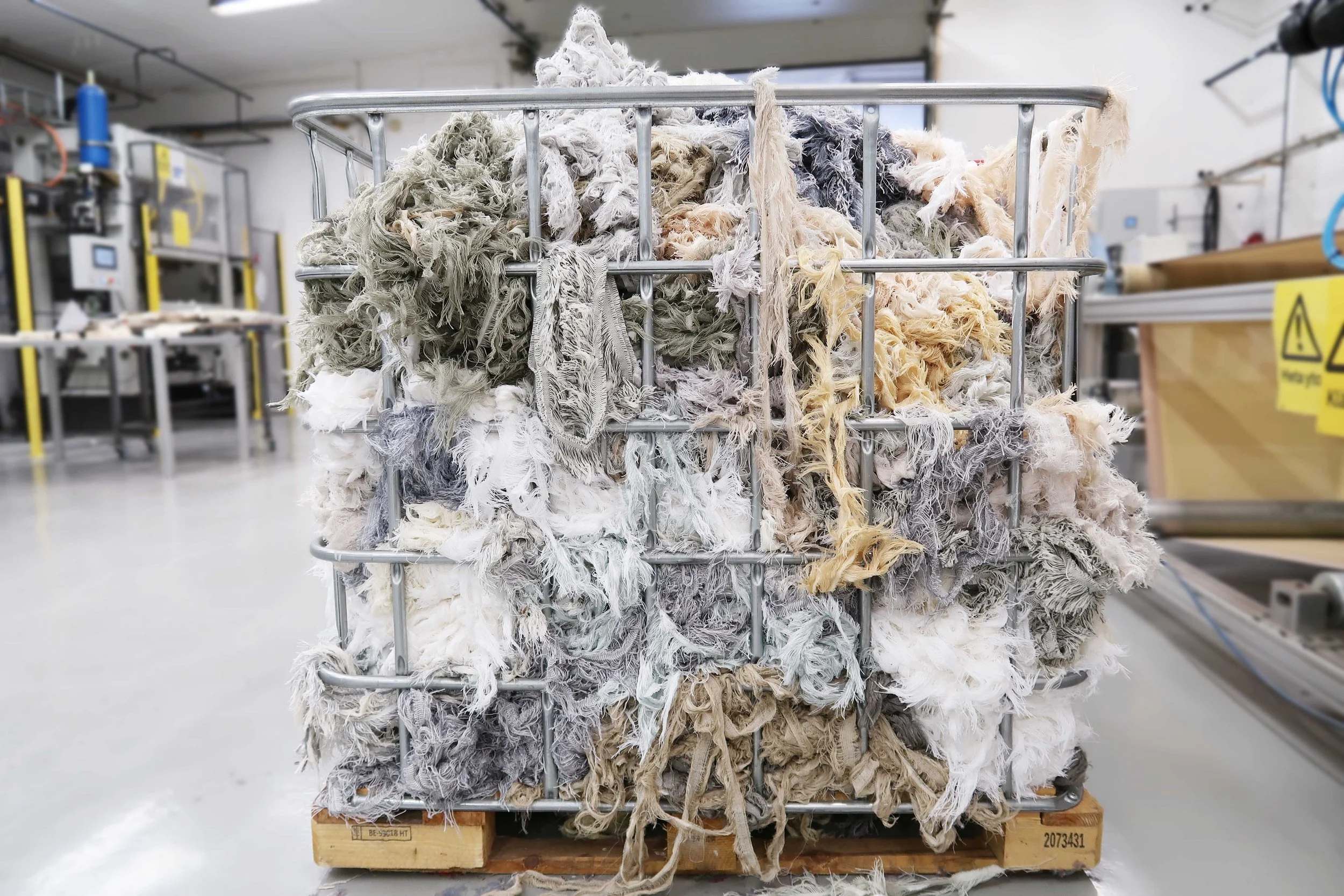
In the project Verification of Climate and Resource-Efficient Non-Woven Production and Products from Recycled Textile Streams, we explored how secondary textile streams can be transformed through mechanical recycling, material development and industrial collaboration.

BACKGROUND
The project explored how secondary textile streams can be transformed into nonwoven materials and high-value products, while evaluating the technical, environmental and commercial conditions needed for industrial scale-up.
CHALLENGE
Recycled textile materials offer clear environmental potential, but commercial implementation depends on more than technology. Cost, performance, material quality, supply security and an immature value chain remain important barriers to scaling textile recycling.
SOLUTION
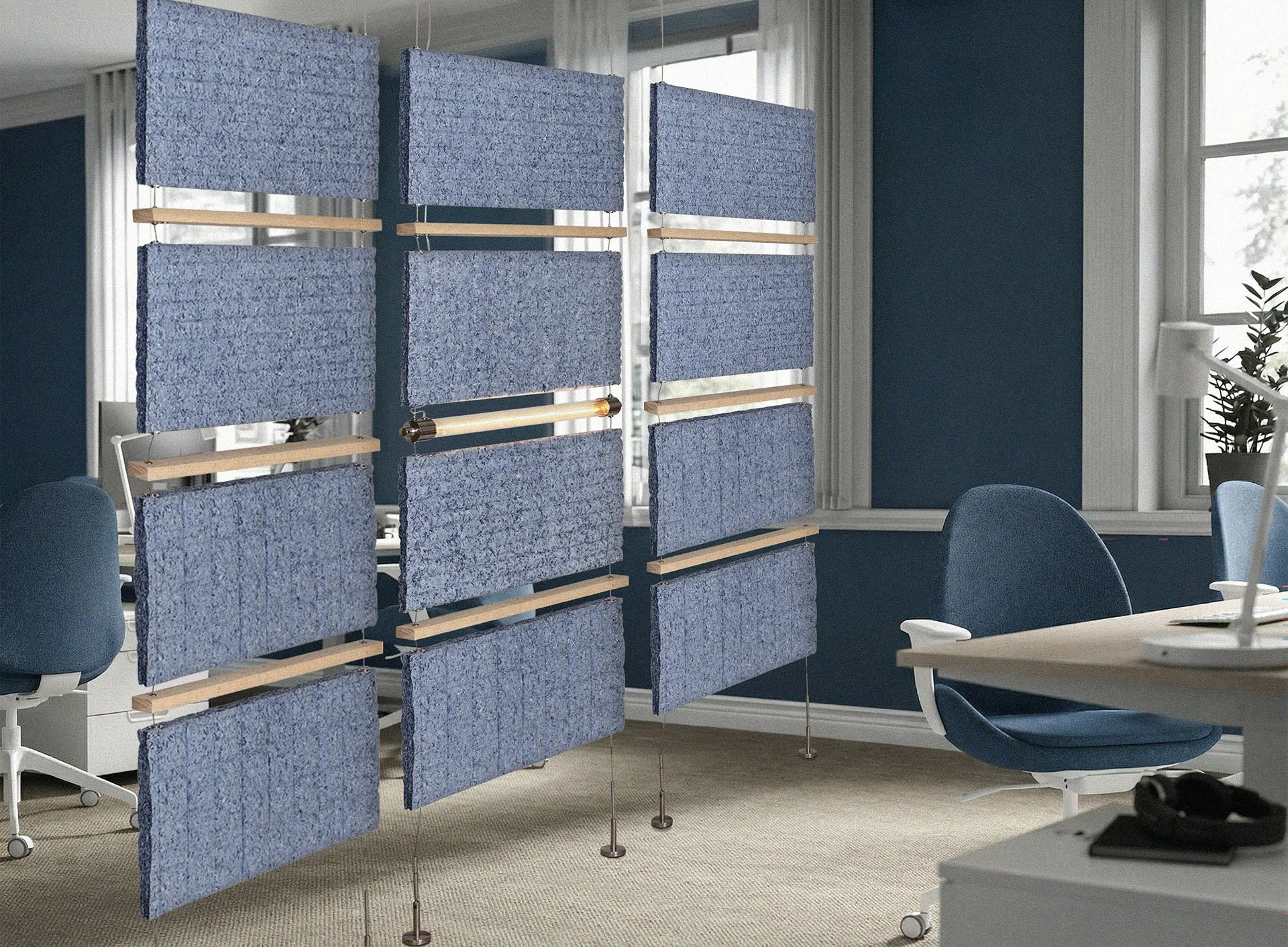
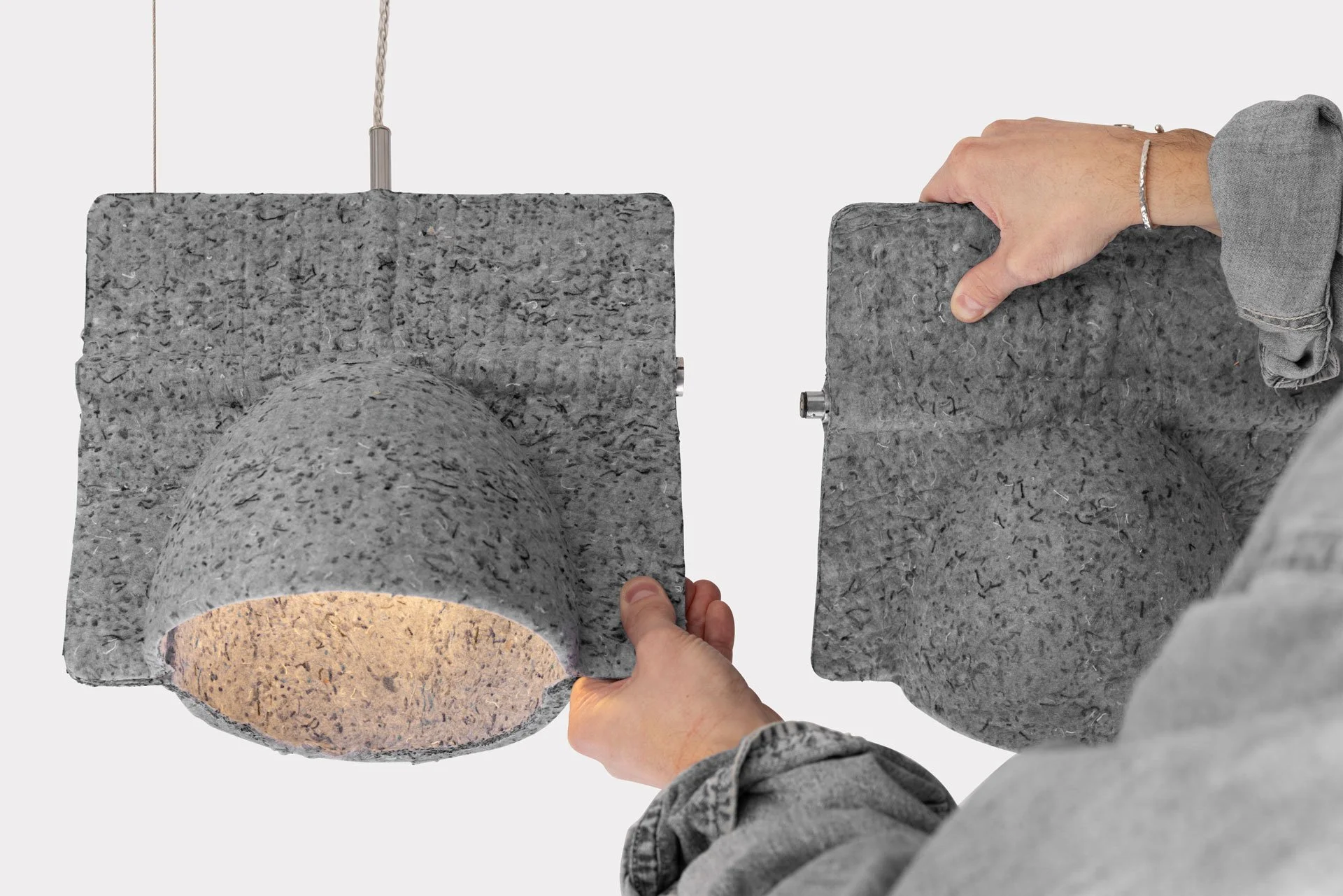
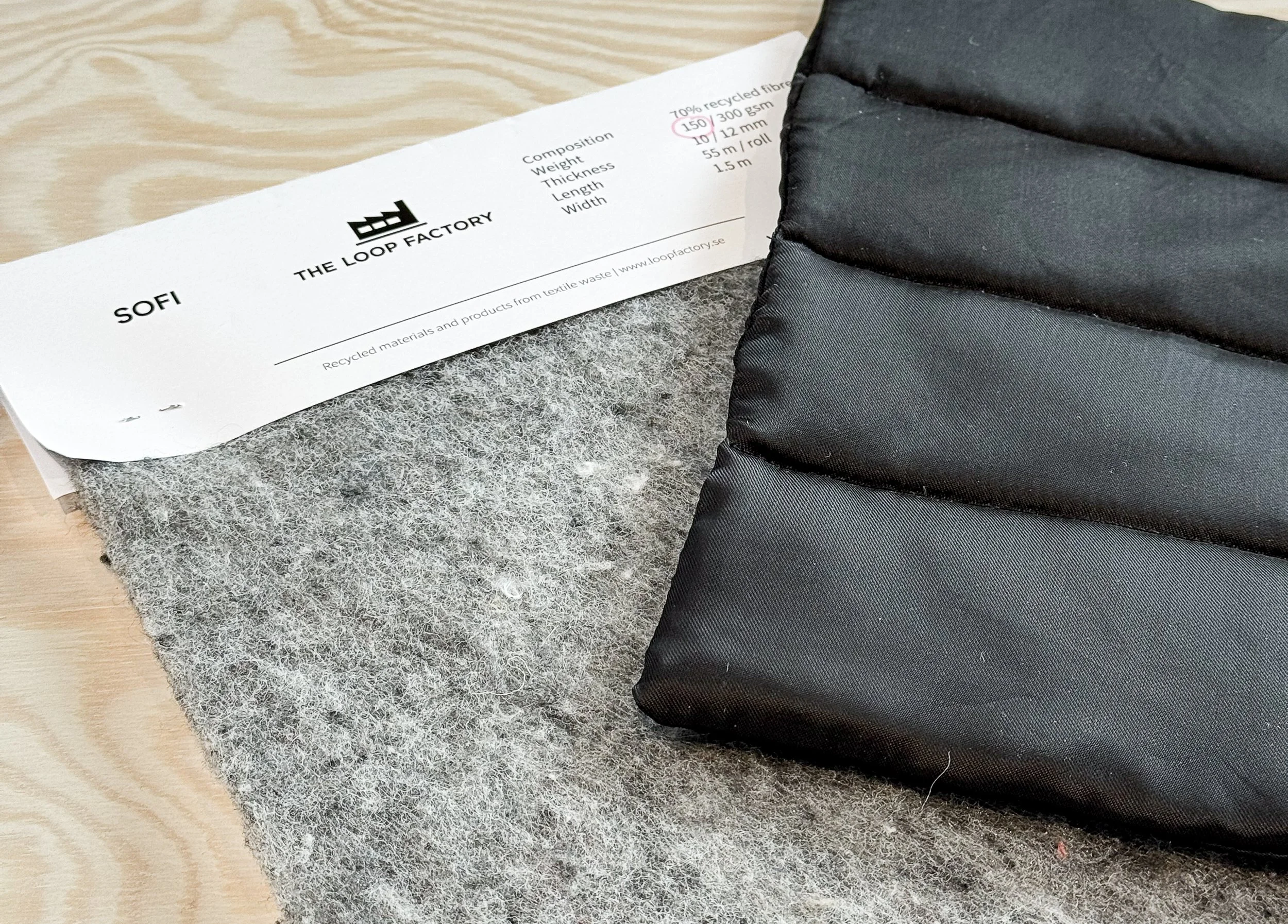
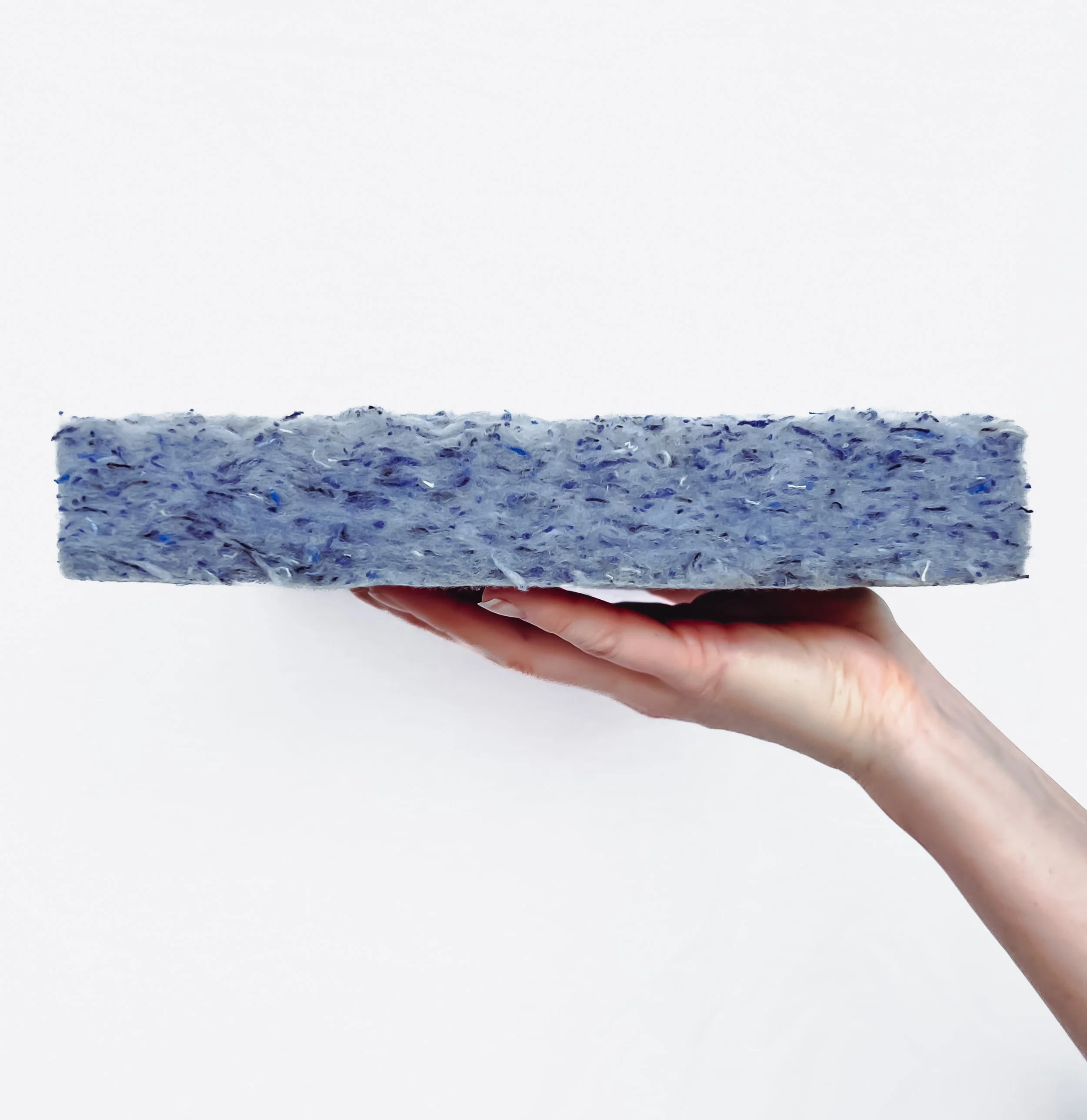
Secondary textile streams were developed and verified in applications including acoustic products, interiors and padding for furniture and apparel. The project combined material and product development, design, customer validation and collaboration across the European textile value chain.
RESULT
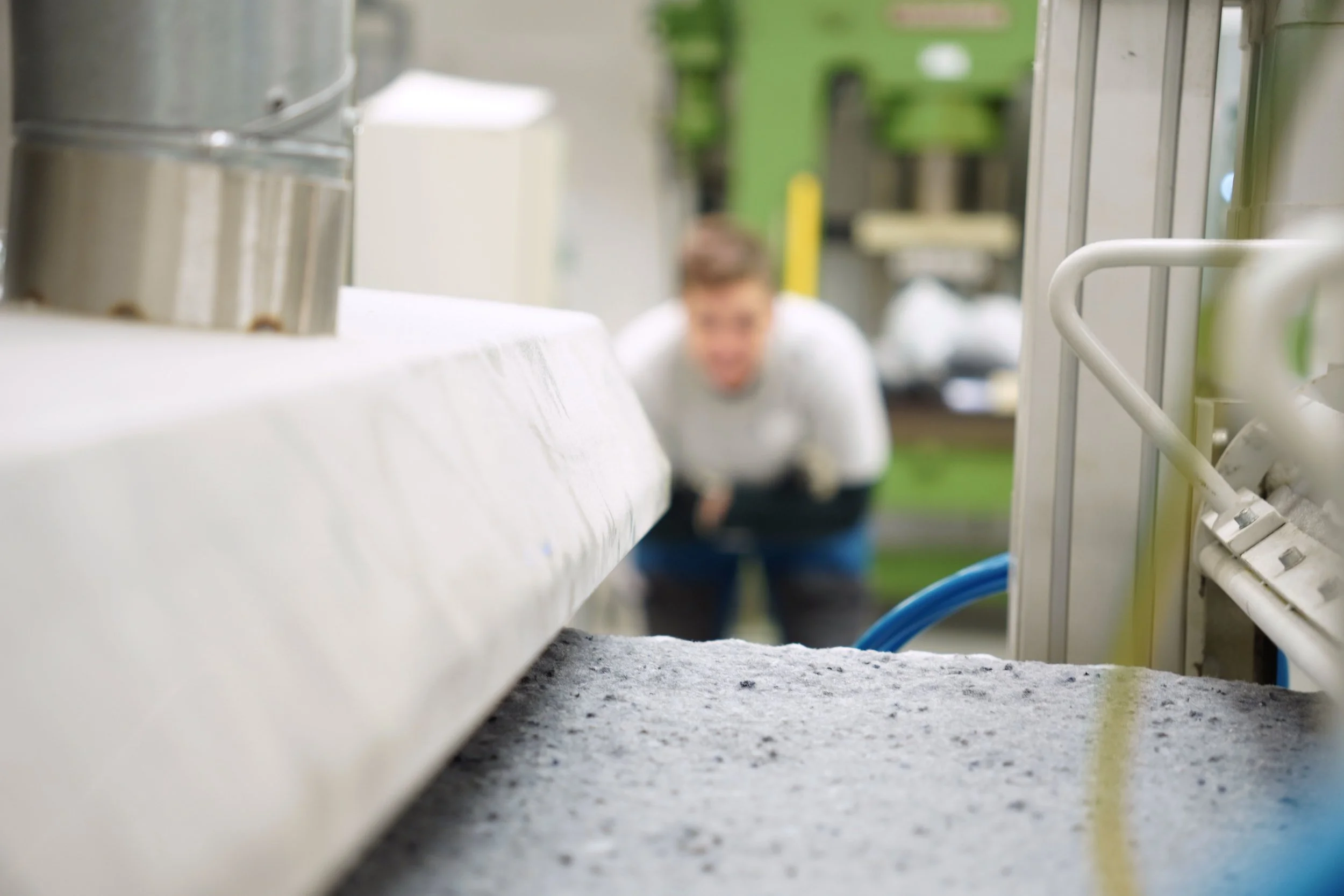
The project verified the technical potential of mechanically recycled textile fibres and identified a path towards industrialisation through existing production partners, rather than requiring investment in dedicated production capacity.
UP TO 80% LOWER CLIMATE IMPACT
Compared with the benchmark primary produced polyester scenario assessed in the LCA. Results depend on assumptions regarding energy systems, transport, and supply chain conditions.
Based on a Life Cycle Assessment conducted according to ISO 14040/44. Results apply to the assessed scenarios and assumptions described in the study and have not been independently verified.


Technical potential is only the starting point. Scaling recycled textile materials also requires the right cost, quality, volumes and value-chain partners.
Test recycled fibres in real applications early. Prototyping and customer validation help identify where a material can deliver both performance and commercial value.
Use existing industrial capacity to accelerate scale-up. Working with established production partners can create a faster route from material development to industrial production.
Measure environmental impact across the full value chain. The LCA showed up to 80% lower climate impact in the assessed scenarios, while also highlighting the importance of electricity mix, transport and value-chain design.
KEY TAKE AWAYS.
the facts.
Funded by: Swedish Energy Agency
Period: 3/2024 – 6/2026
Focus: Textile recycling, nonwoven, circular materials and industrialisation